The task of the heating system is to provide comfortable temperature parameters in the room. There are various systems that allow us to accomplish this task: such as water, air and infrared heating, etc.
Water heating systems are most widely used for frequent construction.
The main elements of such a system are:
Heat supply source from which we directly receive heat. This could be a boiler powered by different types of fuel, a heat pump or another heat source.
The heating system pipeline through which the coolant (liquid that transfers heat from the source to the room) circulates.
A heating device that transfers heat from a source to a room. This can be either a regular radiator, a fan coil unit, or a warm floor. Heat transfer occurs through the convective and radiant components. The greater the difference between the temperature of the heating device and the room temperature, the higher its efficiency.
Purpose and types of automatic control of the heating system
The main purpose of automatic control of the heating system is to maintain the appropriate design temperature in a given room and save energy resources.
There are two main types of regulation - qualitative (when we change the temperature of the coolant), or quantitative (when we change the amount of coolant supplied to the heating device). Most often, these methods are used together. The most widely used systems in Ukraine are automatic temperature control systems for the return pipeline coolant.
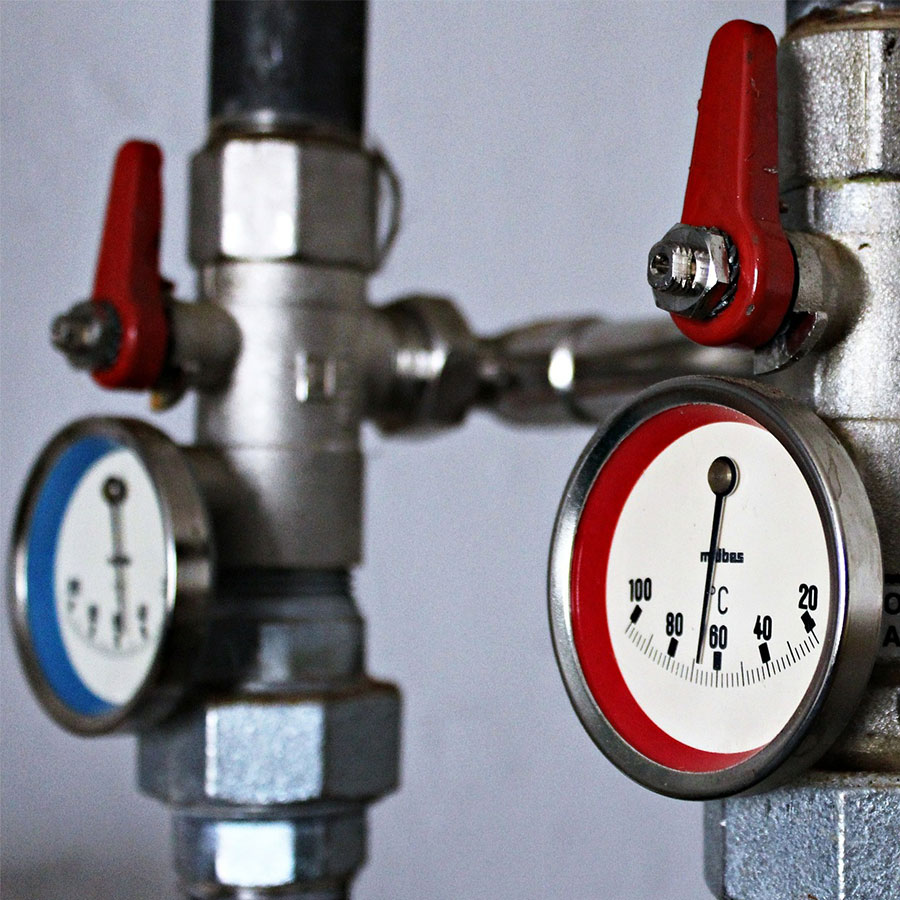
Such regulation is quantitative
since when the temperature in the supply and return pipelines equalizes, the heat supply source is turned off. That is, we change the amount of heat directly coming from the source.
Recently, heating systems have become increasingly popular, where the regulation of room temperature depends not only on the temperature of the return pipeline, but also on the temperature sensor. The temperature sensor can be located outside or inside the room. Based on its readings, a temperature curve is constructed, according to which the heat supply source changes the temperature of the supply pipeline. So, for example, if the outside ambient temperature is +3 ℃, we do not need to heat the coolant in the system to 70℃, but up to 35-40℃ is quite enough. Which will allow you to get a comfortable 20-25℃ indoors in most cases.
Due to the fact that energy tariffs are rising -
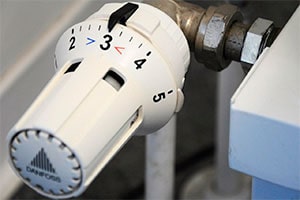
Accordingly, the costs of maintaining the heating system increase. Zonal control systems are becoming increasingly widespread. Zone control can be mechanical or electronic. Mechanical zone control is carried out using a thermostatic valve with a thermostat on the heating device. Electronic zonal control of the room (zone of the heating system) is carried out using a room temperature sensor (electronic thermostat) and an actuator (servo drive).
At the moment, the Ukrainian market offers a wide selection of zonal control systems, both wired and wireless.
Modern automatic electronic heating control systems
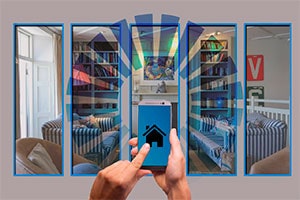
have long gone beyond classical indoor climate control. Thus, most wireless systems allow you to perform the functions of a comfortable (smart) home. For example: controlling your home from anywhere in the world via the Internet, automatically changing the room temperature depending on the consumer’s geolocation, connecting smart sockets and humidity sensors. Using a zonal temperature control system will allow you not only to get comfort and coziness in your home, but also to save 30 to 45% on operating costs.
Reneco specialists will help you choose the automatic control of your heating system, taking into account your tasks and wishes.