fbpx
Solar power plants for enterprises Calculate the cost Contacts About Us Blog

Network solar power plant: how it works

Such solar stations transmit electrical energy to the network and are used to solve the following problems:
  • Saving electrical energy consumption.
  • Sale of excess generated energy at green tariff.
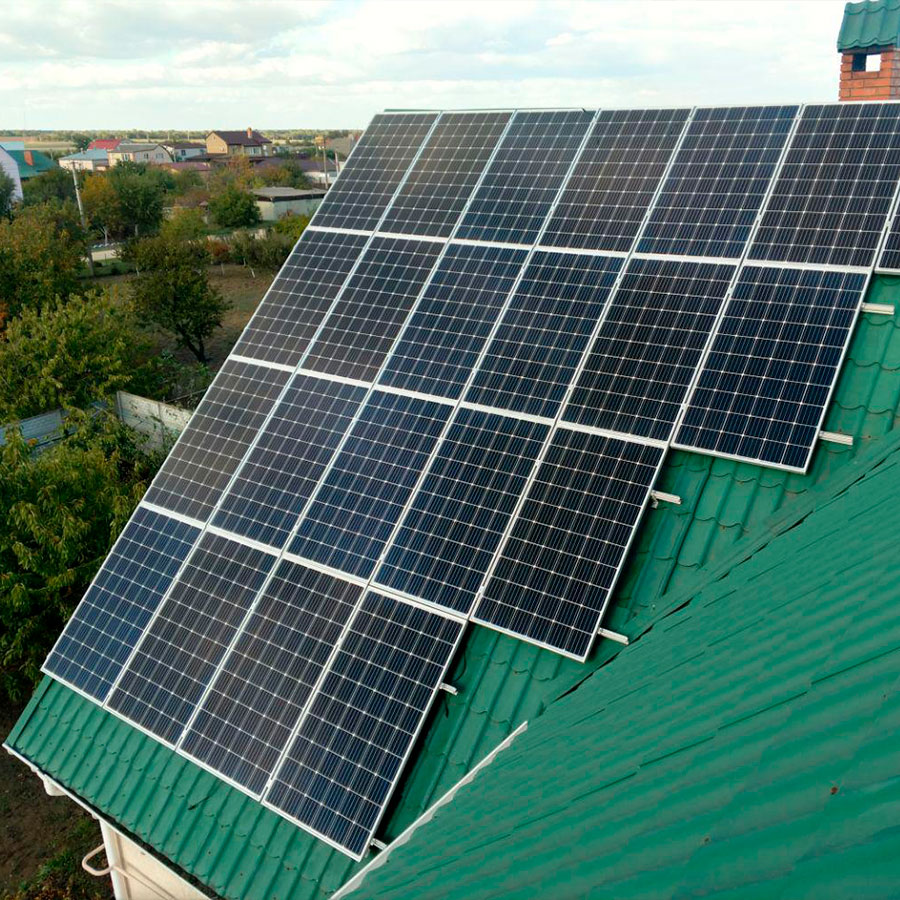
When designing a grid power plant, the following factors should be taken into account: the house's own consumption, the roof area for installing solar panels, the allocated power of the power line to the house, as well as the planned budget for the construction of the station. The power of installed stations for the private sector is limited and is 50 kW maximum. Stations over 50 kW are industrial and are issued by legal entities.
Сетевая солнечная станция

Composition of a network solar power plant:

  • Solar panels.
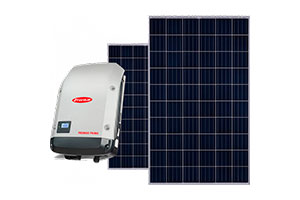
  • Grid inverter.
  • Bidirectional meter with GSM module.
  • DC and AC protection kit.
  • Fixing kit or support structures.
  • Cable and wire products and consumables.
The payback period for a network solar power plant is from 4 to 6 years

Advantages:

  • The payback period for the station is 4-6 years. Next – net profit!
  • Does not require regular maintenance.
  • Low price compared to autonomous and hybrid stations.

Disadvantages:

  • Dependence on the general electrical network.

Solar panels

Solar panels are one of the most important components of any solar power plant. The choice of solar panels depends on the installation method, tasks and budget. There are three types of solar panels: monocrystalline, polycrystalline, thin film. For optimal energy production, solar panels should be facing south. It is also important to maintain the optimal tilt angle when installing solar panels in azimuth and horizon.  

Grid inverter

The task of an on-grid inverter is to transmit the converted AC current to an existing single-phase or three-phase network directly, without the use of batteries. In the event of a power failure, the grid-tied solar inverter turns off automatically. Depending on the required power of the solar power plant, one solar inverter or several can be installed. The Reneco company catalog is presented by the best and proven manufacturers of solar inverters, more details here.

Supporting structures and fastenings

Installation of panels on the roof is carried out to supporting structures or roof covering. To select the correct set of fastenings and supporting structures, the following factors should be taken into account: type of roof - pitched or flat, type of roof covering - bitumen, clay or metal tiles, location of the FEM on the roof - portrait or landscape. If there is a sufficient amount of free territory and a limited roof area, it is recommended to install a ground-based solar power plant. This option may also be optimal for reasons such as: complex roof geometry, inconvenient orientation of the slopes, shading by neighboring buildings and trees. Support structures for ground stations can be made of galvanized steel, anodized aluminum and stainless steel. Photovoltaic modules are placed vertically at a fixed angle on a special support system.

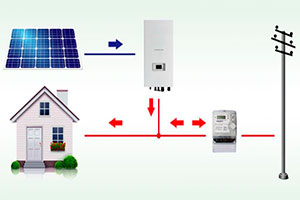
The principle of operation of network power plants

  • Solar panels convert solar energy arriving at the surface into direct electrical current.
  • The network inverter, in turn, converts direct current (DC) received from solar panels into alternating current (AC) and transmits it to the electrical network.
  • If the power of the station exceeds the subscriber’s consumption, then a “reverse flow” of energy is created into the external network.
  • The amount of energy consumed and transmitted is recorded by a special bidirectional counter.
  • At the moment when the solar power plant does not produce electricity, all the necessary electricity for the home is consumed from the network.
Our company’s specialists are ready to answer all your questions. To do this, just contact us in any convenient way indicated at site.  See some of our completed work here.