fbpx
Solar power plants for enterprises Calculate the cost Contacts About Us Blog

Air-to-water heat pump, pros and cons.

At the moment, heat pumps are becoming increasingly popular on the heat source market in Ukraine. In the southern regions of our homeland, air-to-water heat pumps are most widespread. The operating principle of such a pump is based on the intake of heat from outside air and its further transfer to the water heating system. There are a lot of equipment manufacturers, and in the equipment line of each individual manufacturer there may be heat pumps that differ not only in their performance, but also in their design. A reasonable question arises, how then to choose equipment that will optimally suit the given needs. Air-to-water heat pumps can be divided into the following groups:

By compressor type:

  • Start-stop. Heat pumps of this type start the compressor at the request of the heating system automation. They produce a static amount of heat depending on the parameters of the heating system and the ambient temperature.
  • Inverter. The heat pump compressor has a special design and can change its performance within a certain range, depending on the parameters of the heating system and the outside air temperature. Additionally, the change in performance occurs due to a change in the rotation speed of the outdoor unit fan.

By design

manufacturing an evaporator (a heat pump element in which the heat of the air is transferred to the intermediate coolant - freon) and a condenser (a heat pump element in which the heat from the intermediate coolant - freon is transferred to the heating system):  
  • Split. The heat pump consists of two blocks, external and internal, connected to each other by a copper freon pipe.
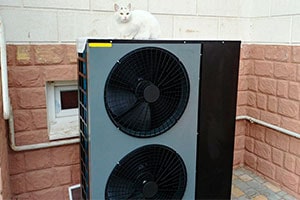
  • Monoblock. The heat pump consists of a single unit containing both the evaporator and the condenser.
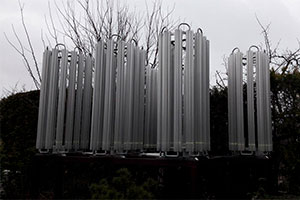
  • Heat pumps with external evaporator. The heat pump's evaporator is connected via copper piping and is located separately from the main unit.
So how do you choose a heat pump? We propose to consider all the pros and cons of this type of equipment.

Start-stop:

  • Pros:
  1. Reliability. Since the compressor always operates at factory parameters, its reliability and performance are maximum.
  2. Simplicity. The simplest design, there are no additional elements that can lead to breakdown.
  • Cons:
  1. Clock sensitivity. When starting up, the compressor is subject to increased wear and tear, so frequent starts and shutdowns can lead to equipment failure. This problem can be solved in two ways. The first is software. which prevents the compressor from starting more often than once every 15 minutes, the second is the competent selection of the buffer capacity of the heating system, which allows you to accumulate heat and reduce the number of on and off cycles.
  2. High inrush currents. The available electrical power may be limited, and then high inrush currents may be critical.

Split:

  • Pros:
  1. System resistance to short-term power outages. The heat pump is connected to the water circuit in the heated furnace room, so during a short power outage the heating system will not defrost.
  2. Wide selection of manufacturers in different price ranges. The most widely represented segment in the air-to-water heat pump market.
  • Cons:
  1. Possible freon leaks. The outdoor and indoor units of the heat pump are separated from each other and connected by copper piping. Improper installation can lead to leakage. Since modern freons have a multi-component structure, partial refilling is not possible and a complete replacement will be necessary.
  2. Freon fasting. Refilling with freon at the manufacturing plant is designed for a certain pipeline length, and if during installation the length of the pipeline exceeds this value, it becomes necessary to refill during commissioning.

Inverter:

  • Pros:
  1. Smooth change in power, which allows you to achieve greater operating efficiency in conjunction with the automatic heating system.
  2. Low inrush currents.
  3. Less noise from the outdoor unit. The power change occurs not only due to the design of the compressor, but also due to a change in the rotation speed of the outdoor unit fan. Therefore, during basic operating modes, the noise emitted by the outdoor unit is lower.
  • Cons:
  1. Complication of design. A high-tech element appears in the heat pump, the failure of which will lead to expensive repairs.
  2. Increased cost compared to start-stop heat pumps.

Candy bar:

  • Pros:
  1. Easy to install. It does not require the involvement of specialists in air conditioning equipment for the installation to connect the freon pipeline. Maximum COP (performance per 1 kW of consumed electricity. Since the equipment is manufactured at the manufacturing plant in one solid unit, the automatic operation of the heat pump is initially adjusted to the highest possible efficiency.</li >
  • Cons:
  1. The main disadvantage is the weak protection against power outages. In regions where power outages are a rare situation, such heat pumps have become most widespread. In the Ukrainian market, unfortunately, the problem of power outages is quite relevant, and there are still regions where “emergency planned” outages are a fairly common occurrence. This can be solved in several ways: by installing a special anti-freezing valve or using specialized anti-freezing liquids as a coolant approved by the manufacturer.

Heat pumps with external evaporator:

  • Cons:
  1. Increased requirements for the qualification level of installation personnel, since the copper pipeline connecting the evaporator is manufactured at the equipment installation site and requires a large number of soldered connections.
  2. High humidity in the southern regions of Ukraine leads to intense icing of the evaporator. Ice prevents equipment from being used at its maximum efficiency.
  3. Long length of pipelines. The dimensions of the evaporator force the manufacturer to install more powerful and expensive compressors. A compressor with increased power produces more noise during operation. Therefore, it is necessary to ensure that the indoor unit is installed in a room where noise will not disturb anyone.
  • Pros:
  1. The external evaporator has no additional moving elements, which makes it reliable and absolutely silent.
  2. Aesthetic appearance of the evaporator, which can be seamlessly integrated into the existing design.

Advantages of working with Reneco

We sincerely hope that the information provided will help you in choosing a heat pump. If you still have questions and are experiencing difficulties in selecting furnace equipment based on a heat pump, Reneco specialists will always help with both the selection and installation of equipment. Our engineering and installation staff have successfully implemented more than 100 projects across Ukraine using heat pumps. You can see some of them here.