A solar inverter is a device whose main task is to convert direct current received from solar panels into alternating current.
The inverter is the main equipment of any solar power plant. An important element responsible for the correct operation of the station - after all, every volt produced by photovoltaic panels passes through the inverter.
In this article we will briefly tell you what to look for first when choosing an inverter.
Type of solar station
Depending on the tasks, solar stations can be: autonomous, networked and hybrid.
Each of these solar systems has its own characteristics, for which a special inverter is suitable: autonomous, network or hybrid.
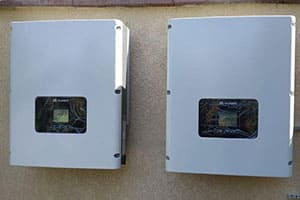
The Autonomous solar inverter “offgrid”can be connected to the electrical grid, or work completely autonomously. Also, instead of the mains, you can use a petrol, diesel or gas generator. Batteries are required. It is possible to have a built-in battery charge controller from solar panels. Can serve as an uninterruptible power supply.
The Grid-connected solar inverter "ongrid"transmits the converted AC current to the existing single-phase or three-phase network directly, without the use of batteries. They are widely used at home and industrial facilities, the main task of which is to reduce the cost of electrical energy, as well as its sale at a “green” tariff.
The Hybrid solar inverter combines the functions of networked and autonomous inverters, has multiple priorities for powering the load and charging the battery, and often has the ability to “mix” energy flows from different sources to power the load or charge the battery. Can transfer energy to a centralized network to save consumption and/or sell under the Green Tariff. The price of this type of inverter is higher than the two listed earlier.
Each of the solar systems has its own characteristics, for which a special inverter is suitable: autonomous, network or hybrid.
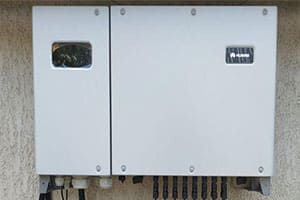
Determination of powerinverter
The power of the inverter is determined by the power of the solar panels and the maximum power of all devices that can be powered into the network. It is necessary to determine the consumed peak or starting power of devices, which can be 5-7 times greater than the operating power.
Input voltage
This parameter directly affects the efficiency of the solar system.
The recommended voltage is:
System power up to 600 W - 12 V
System power 600-1500 W - 24 V
System power more than 1500 W - 48 V
Number of phases
For a private home, both single-phase and three-phase inverters are suitable. For the industrial sector, only three-phase is suitable.
Inverter efficiency
Inverter efficiency is also an important parameter. The energy consumption of the inverter should not exceed 5-10% of the energy passing through it.
We do not recommend using an inverter whose efficiency is less than 90%.