fbpx
Solar power plants for enterprises Calculate the cost Contacts About Us Blog

Maintenance of the solar station / Reneco

Maintenance of the solar station. Is it necessary?

We are often asked about the necessary maintenance for solar power plants. We will try to answer as much as possible in this article. Basically, the following recommendations apply to all types of stations in terms of the photovoltaic subsystem and are advisory in nature, but can help maintain the smooth operation of a solar station for many years. A well-designed solar system requires minimal maintenance; however, the performance and reliability of the system can be improved by following a few simple steps. We offer you to familiarize yourself with the translation of the original instruction manual for photovoltaic modules produced by one well-known brand.

Recommendations 1-3

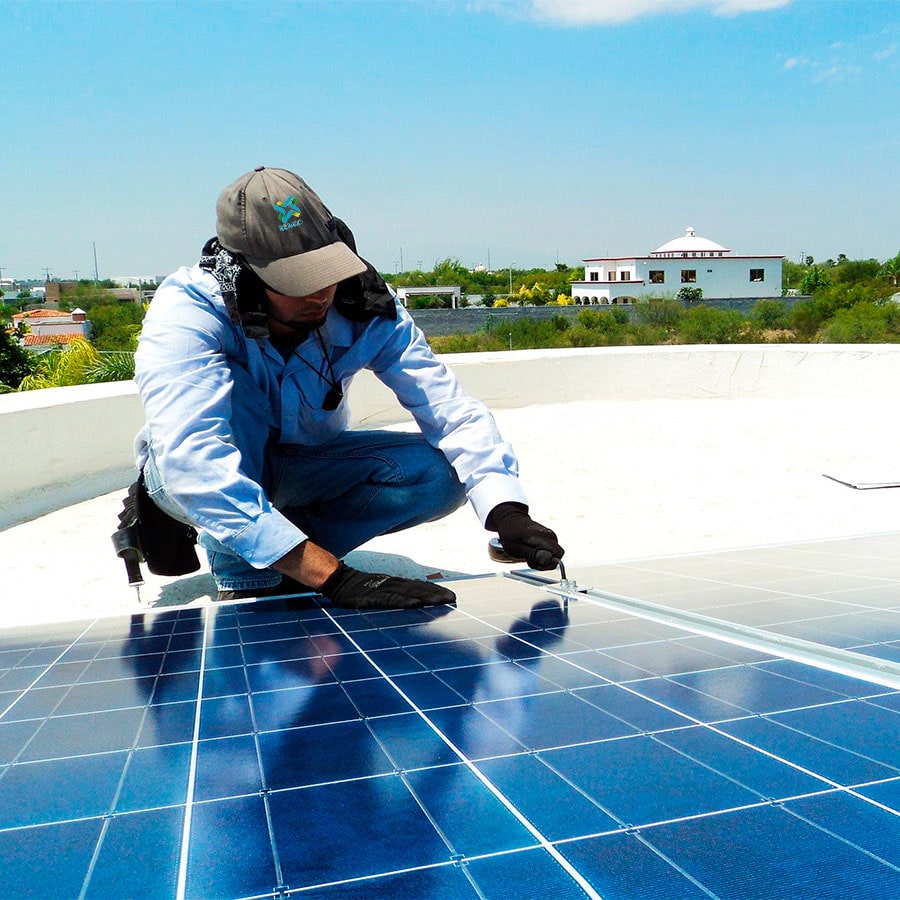
  • Maintenance should be carried out at least once a year by professional personnel, always wearing rubber gloves and boots, with a maximum operating voltage of at least 1000 V DC (for modules with a maximum system voltage of 1000 V), and at least 1500 V (for modules with a maximum system voltage of 1500 V).
  • Remove any vegetation that may shade the solar PV modules: shading reduces performance.
  • Make sure that the fasteners are tightened properly.
Recommendations 4-9

  • Check all cables to ensure that connections are secure; cables should be protected from direct sunlight and located away from areas of water accumulation.
  • Make sure that all fuses in the circuit at each ungrounded pole are in good condition.
  • It is recommended to check the tightening torque of the terminal bolts and the general condition of the wiring at least once a year. Also, make sure that the fasteners are tightened properly. Poor connections will damage the array.
  • The modules to be replaced must be of the same type. Do not touch live parts of cables and connectors. Use appropriate safety equipment (insulated tools, insulating gloves, etc.) when working with the modules.
  • The amount of electricity generated by a solar module is proportional to the amount of light falling on it. A module with shaded cells will produce less energy, so it is important to keep the modules clean.
  • Usually, rainwater is sufficient to keep the modules clean, but it is especially important to make sure that the solar modules are cleaned before the summer. The following PV modules require more regular cleaning: those installed at an angle of less than 10°; those located in particularly dusty areas; those installed in landscape orientation, or in areas with high levels of pollution; those located near large concentrations of birds.

Recommendations 10-14

  • When cleaning the back of the module, take care not to damage the backing material. Modules that are installed flat (0° tilt) should be cleaned more frequently, as they will not "self-clean" as effectively as modules installed at a tilt of 10° or more.
  • In case the solar modules need to be cleaned, use a soft cloth together with a mild detergent and clean water. Be careful to avoid strong thermal shocks that could damage the module during cleaning.
  • Wash the modules with water that is at a temperature similar to the modules being cleaned.
  • In large systems, the benefit of cleaning the array of dirt and debris is a trade-off between the cost of cleaning and the increase in energy production resulting from this cleaning, and the time it takes to re-contaminate the modules after cleaning.
  • If you are not sure whether to clean an array or part of an array, first select a "string" of the array that is particularly dirty, then clean it:- Measure and record the current supplied to the inverter from this string. - Clean all modules of the string. - Measure the current flowing to the inverter again and calculate the % improvement from cleaning. - If the improvement is less than 5%, it is usually not worth the effort to clean..

Recommendations 15-18

  • The above check should only be performed when the insolation is virtually constant (clear sky, bright sun, no clouds).
  • The back surface of the module usually does not need to be cleaned, but if it is deemed necessary, avoid using any sharp objects that could damage the base material.
  • During repairs, cover the front surface of the modules with an opaque material. Modules generate high voltage when exposed to sunlight and are dangerous.
  • PV modules are equipped with bypass diodes in the junction box. This minimizes module heating and current losses.
- Do not attempt to open the junction box to replace the diodes, even if they are defective. - In (older) systems using a battery, blocking diodes are usually placed between the battery and the PV module output to prevent the battery from discharging at night.

Product replacement:

In the event that the module is damaged (broken glass or scratched on the back) and must be replaced, then: - Follow the safety precautions listed earlier in the manual. - Wear cut-resistant gloves and other personal protective equipment required for the specific installation. - Insulate the affected array string to prevent current flow before attempting to remove the module. - Disconnect the connectors of the damaged module using the appropriate disconnect tool provided by the vendors. - Replace the damaged module. It should also be remembered that a grid inverter is also an important part of the system. What do manufacturers of this equipment recommend? Most passive-cooled solar inverters do not require any regular maintenance, but it is recommended to clean the cooling radiators with a soft brush to help the inverter dissipate heat better and extend its lifespan.